You’ve picked the photo, finished the design and opened Instagram. Then you reach the caption box, and suddenly explaining something you talk about all day feels surprisingly difficult.
You already have useful things to say to your clients. We’ll give those thoughts a simple shape, then look at three real captions so you can see what helps a reader understand the post and what might still leave them with questions.
A caption has three simple parts.
Give them a reason to keep reading.
Your first line is the hook. Think of it as the start of a conversation: it should help the right person recognise something they want to know. A question you hear at work is a good place to begin.
“Not sure which facial to book?”
Explain what they came to find out.
Once you’ve opened the conversation, answer the question. Use the words you’d use with a client, and give them something concrete to picture. In our example, that’s what happens at the start of the appointment.
“Our First Visit Facial starts with a chat about your skin and your routine.”
Tell them what to do next.
The call to action tells an interested reader how to take the next step. Choose one thing that fits the post: book an appointment, send a question or save the tips. Then make it clear how to do it.
“Tap the link in our bio and choose First Visit Facial.”
Put those parts together and you have a useful caption: a reason to read, an answer and a next step. You can keep it short when a short answer does the job.
Let’s look at three real captions.
As we go through these examples, look for the same three parts. You’ll see choices worth borrowing and a few places where adding a detail could make the caption more helpful.
RESULTS
Tell the story behind the photo.
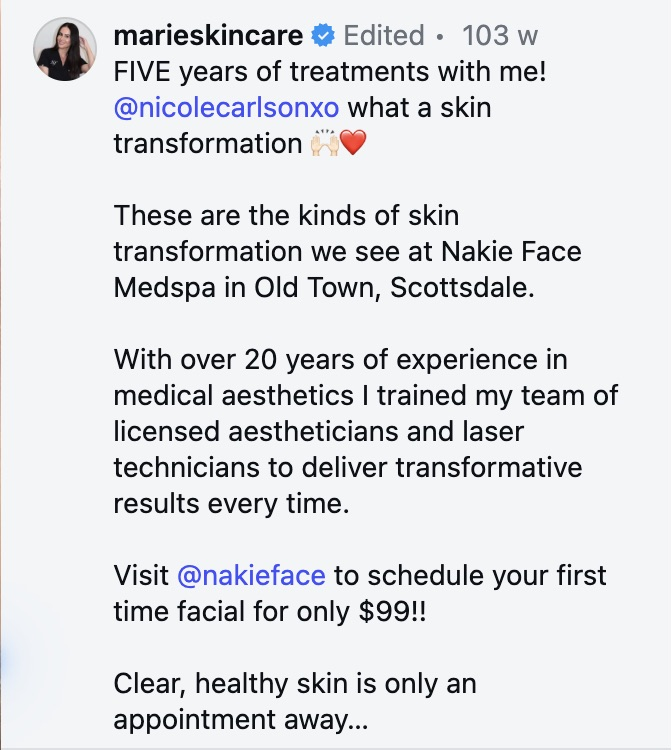
- Good hook: it gives a timeframe.
“Five years” gives the reader a timeframe before they look at the result. It helps them understand that they’re seeing a longer journey and gives them a reason to read about it.
- Missing from the middle: which treatments?
The caption talks about experience, but leaves out the treatments used. If you were considering a visit, that would be a natural next question. For your own post, explain what this client had and avoid a promise such as “results every time.”

TREATMENTS
Explain what happens in the appointment.
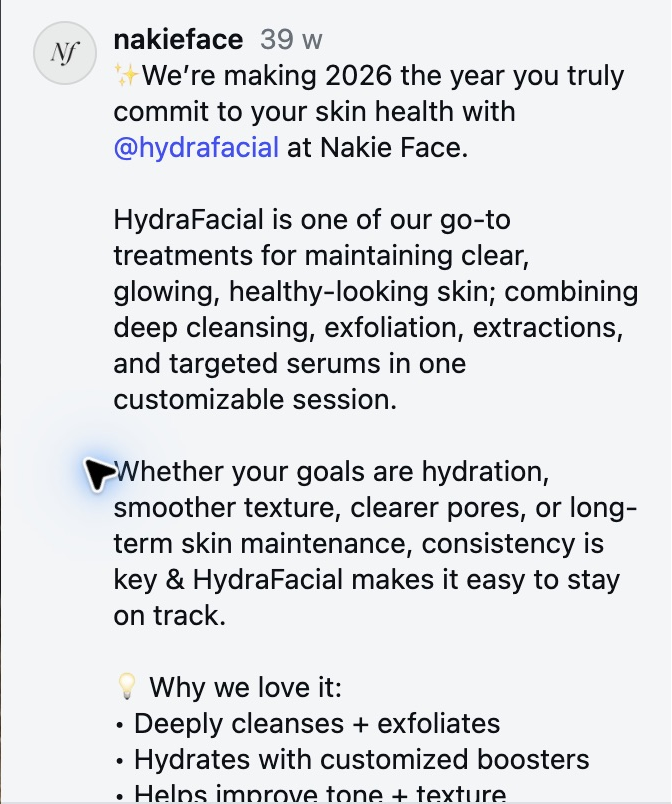
- The hook could be clearer.
“Commit to your skin health” leaves the reader guessing about the subject. A line like “What happens during a HydraFacial?” tells them what they’ll learn before they decide to read on.
- The middle explains the treatment.
Naming the steps gives someone more to work with than “great results.” You can make the explanation easier to follow by adding a few familiar words, such as explaining “exfoliation” as removing dead skin from the surface.
CLIENT CONCERNS
Start with what the client recognises.
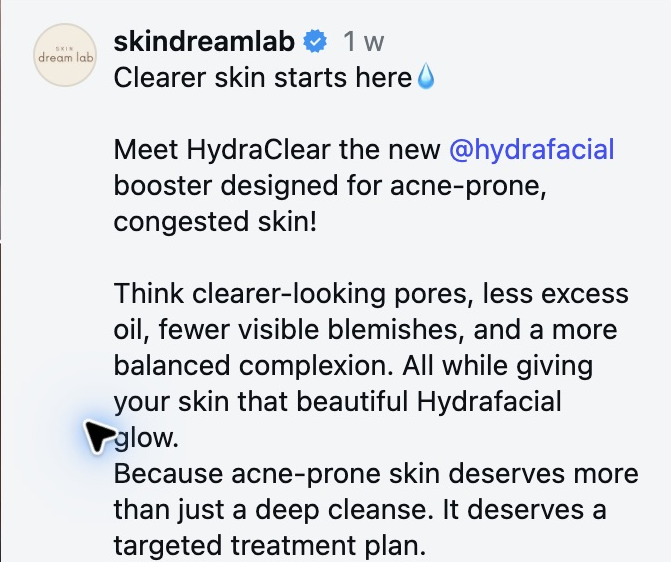
- The middle names who it’s for.
“Acne-prone, congested skin” helps the reader recognise whether the subject relates to them. A product name on its own may not mean much to someone who hasn’t used it before.
- The ending needs a CTA.
The phrase “A targeted treatment plan” describes an idea, but doesn’t tell an interested person how to ask about one. If you offer consultations, you could finish with: “Tap the link in our bio to book a skin consultation.”
A quick check before you post
- Hook: is it clear why someone should read on?
- Middle: did you explain it in words a client would understand?
- CTA: did you give one clear next step?
To try this yourself, pick a question you answered this week. Write the answer as you’d say it in person, then add an opening line and a next step that fit. Read it aloud once before posting. If it sounds like something you’d actually say, you’re on the right track.
CAPTIONS INCLUDED IN YOUR SCC CALENDAR
Get a caption with every calendar post.
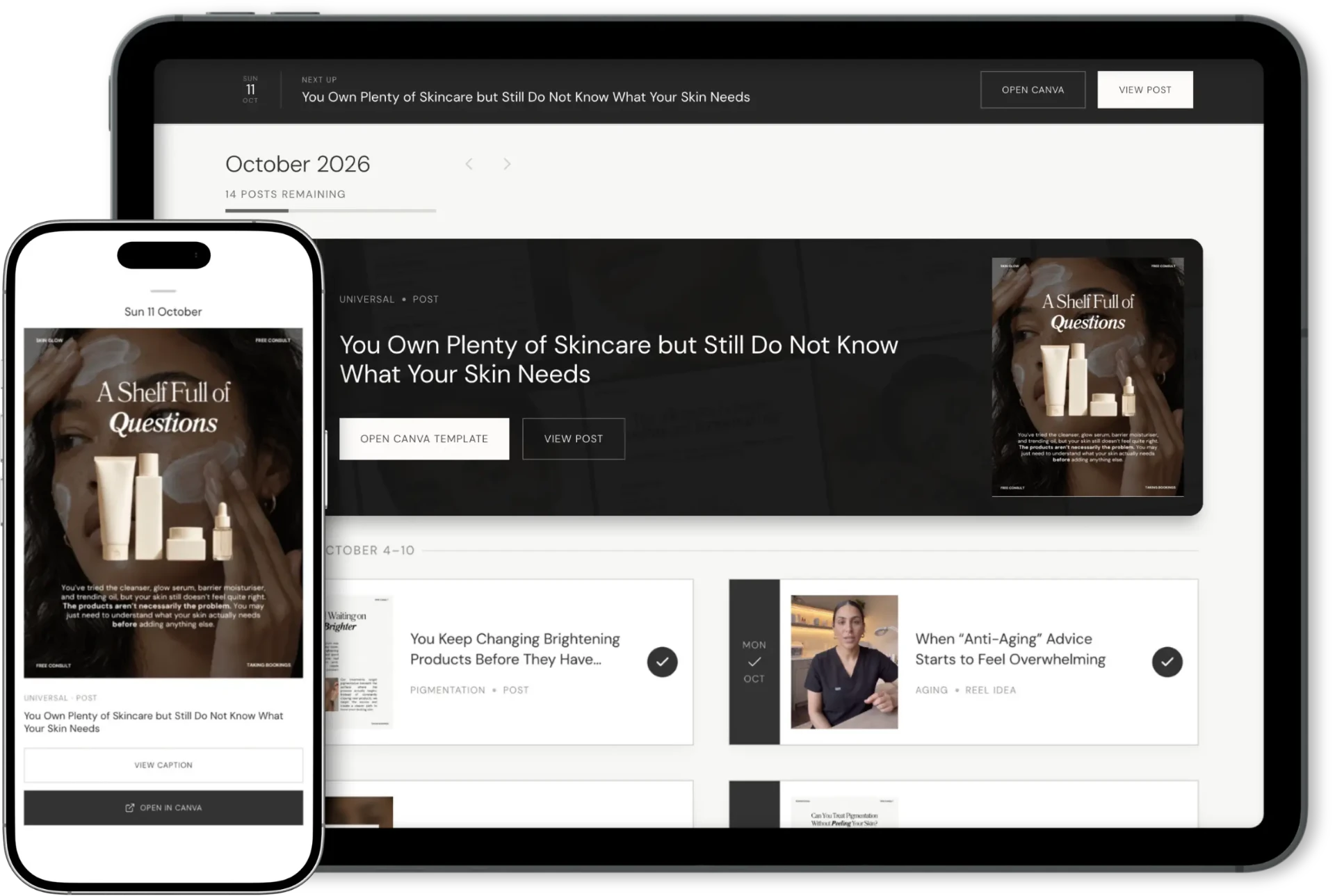
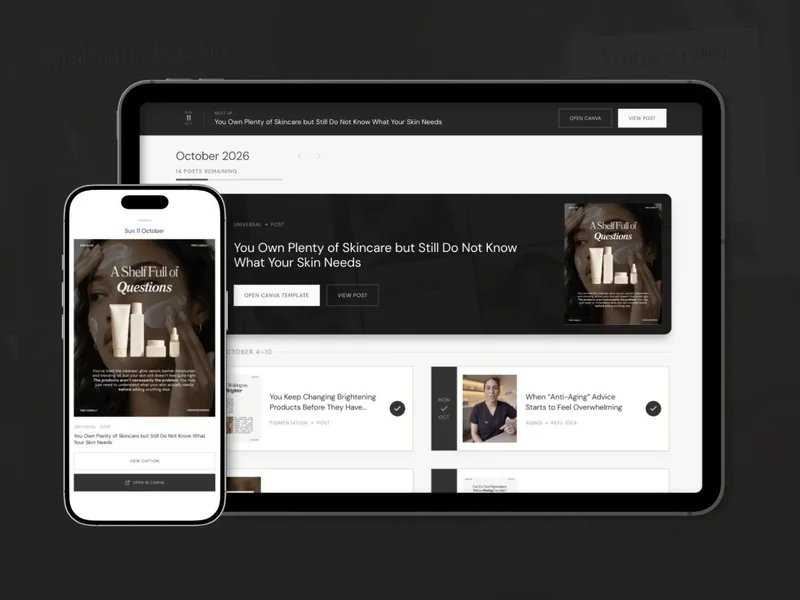
Some days you’ll have a clear idea and want to write it yourself. On others, a starting point helps. Every post in your SCC calendar comes with a written caption you can open alongside the design. Adjust the service details and booking instructions, then copy it when you’re ready.
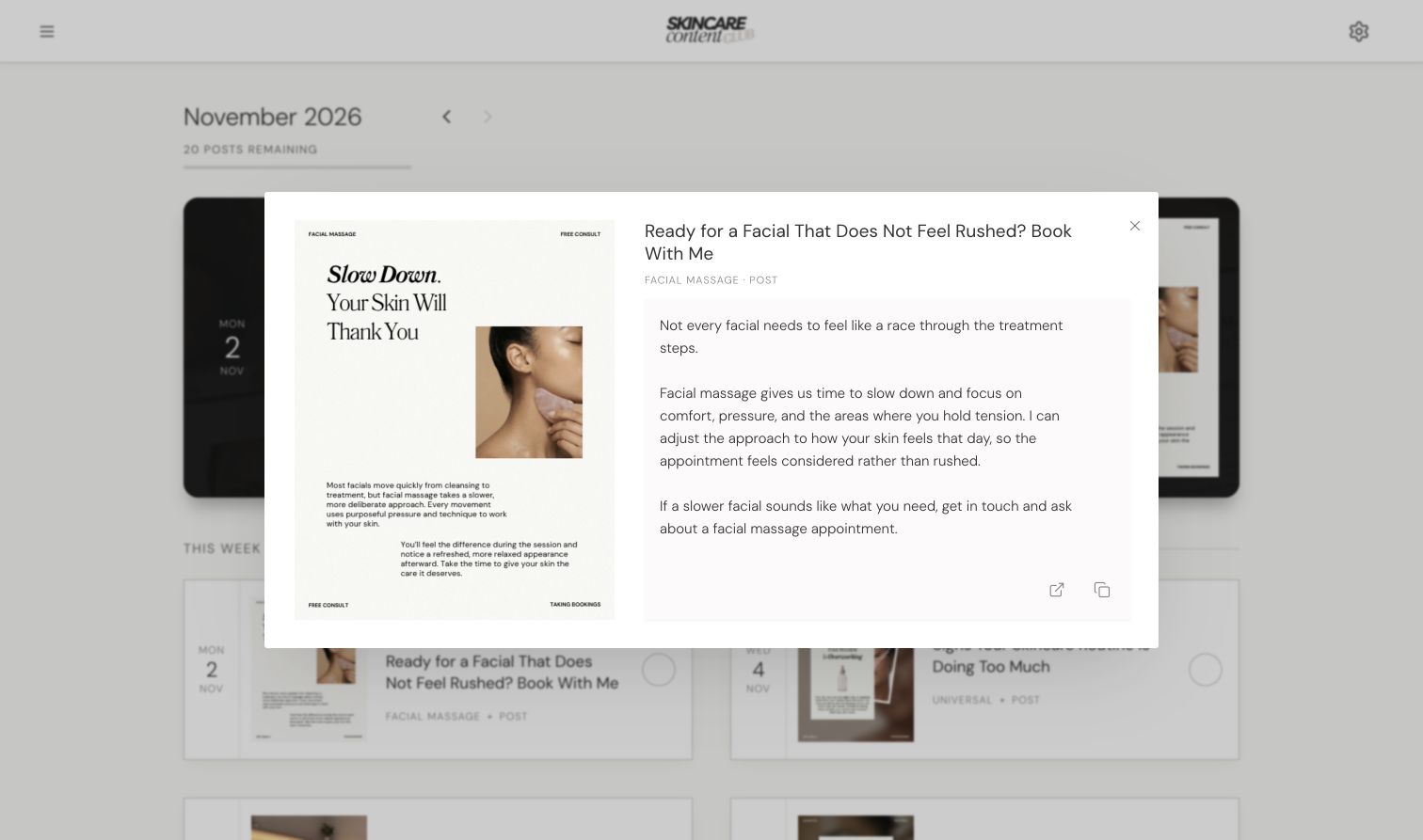
Use the same three-part check with that caption: does the opening fit your clients, does the explanation match your service, and can someone follow the next step? A few personal details can make the draft feel like your own.