A client leaves you a lovely review. They mention how much more comfortable their skin feels, or how you helped them make sense of their routine. You’d love to share it, but turning that message into an Instagram post can feel a little awkward.
Those details are a good place to begin. Someone thinking about their first facial may recognise the same worries in your client’s words. A review gives them a glimpse of what it could feel like to come to you for help.
There’s a person behind every review
Think about the reviews that have stayed with you. Often, it’s a small detail: a client felt listened to, understood their routine for the first time, or looked forward to an appointment they’d been nervous about. That’s the part worth sharing.
Let’s look at Emma, whose recurring breakouts and tight-feeling cheeks brought her to Marlow Skin Studio. We’ve used her story in two templates below: a single review post and a five-slide carousel.
“I came in with recurring chin breakouts and tight-feeling cheeks. Lisa helped me simplify my routine. By week six my cheeks felt more comfortable, and by week twelve I was seeing fewer breakouts. I finally felt less confused about my skin.”
Emma · 12-week skin journey at Marlow Skin StudioA single post can say plenty
You don’t always need a long post to share a client’s experience. Here, the photos show the change in Emma’s skin, and her review tells us how she felt along the way.
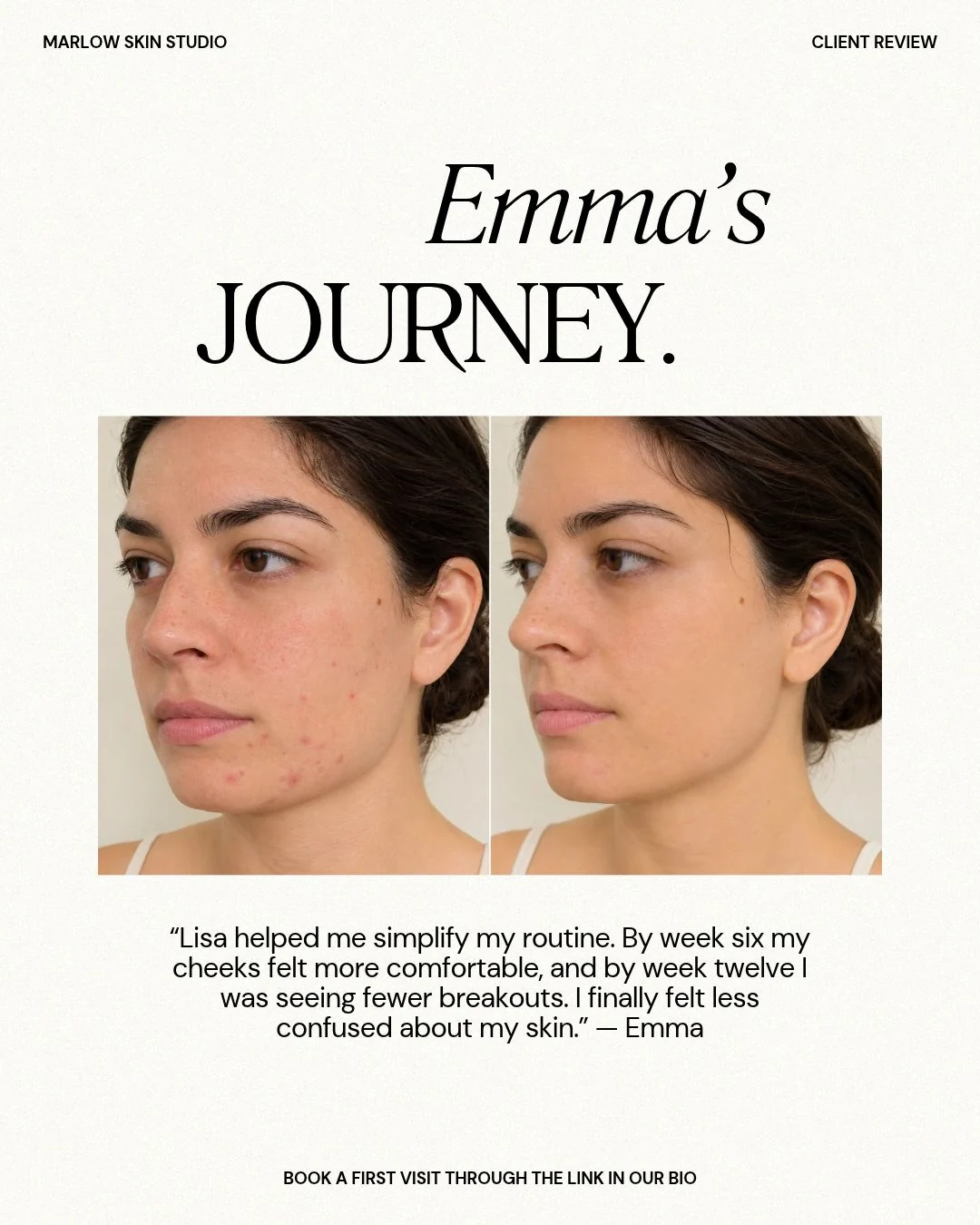
“I finally felt less confused about my skin.”
That last line gives us something a photo can’t show. Emma had been trying to understand her skin, and having someone help her mattered.
A person reading this may have a bathroom shelf full of products and still feel unsure what to use. Emma’s words give them something familiar to connect with.
When you choose a review to share, look for the detail that sounds like your client. It might be a calmer routine, feeling comfortable asking questions, or knowing what to do between appointments.
The caption is where you can fill in a little of what happened between the photos. For Emma, that meant facial appointments, a simpler home routine and regular check-ins. A few sentences help someone picture the care behind the change.
“When Emma first came to see us, she was dealing with recurring chin breakouts and tight-feeling cheeks. Over 12 weeks, we worked on a simpler home routine alongside her facial appointments, checking in on how her skin felt along the way. She told us she finally felt less confused about her skin. If you’re unsure where to start with yours, tap the link in our bio and choose First Visit.”
A carousel lets you share more of the story
If you’ve been seeing a client for a while, you’ll know how much can happen between the first photo and the latest one. There are conversations, check-ins and changes the client feels before they’re easy to see in a picture.
That’s where a carousel comes in. We’re sharing the same experience here, with a little more time spent on each stage. Emma’s introduction, three points in her journey and an invitation to book fit into five slides.
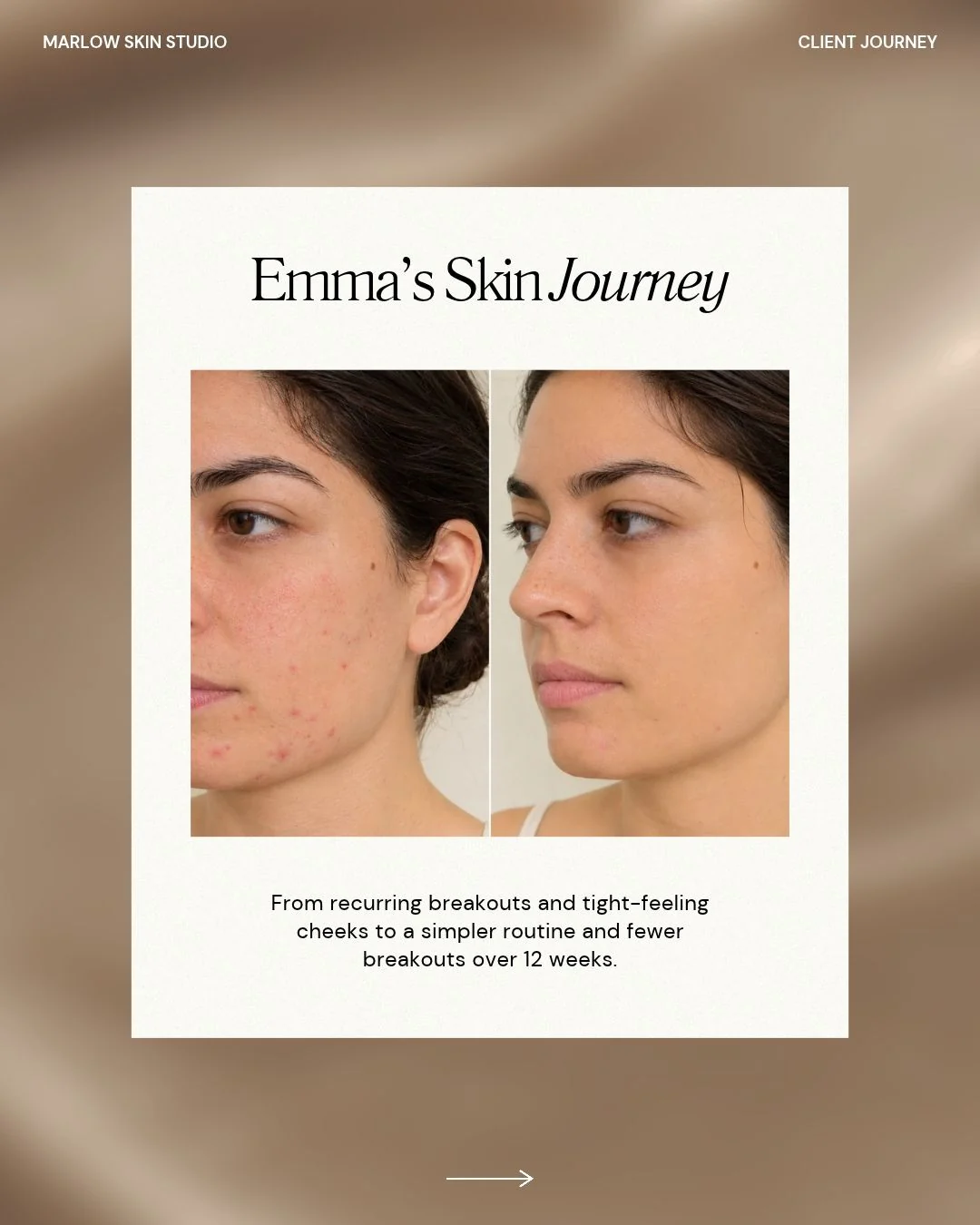 01 · MEET EMMA
Her story at a glance
The opening comparison gives us a reason to be curious about Emma’s experience. We can see her skin has changed, and the mention of 12 weeks tells us this happened over a series of visits.
For someone dealing with similar concerns, the natural next question is: what happened along the way?
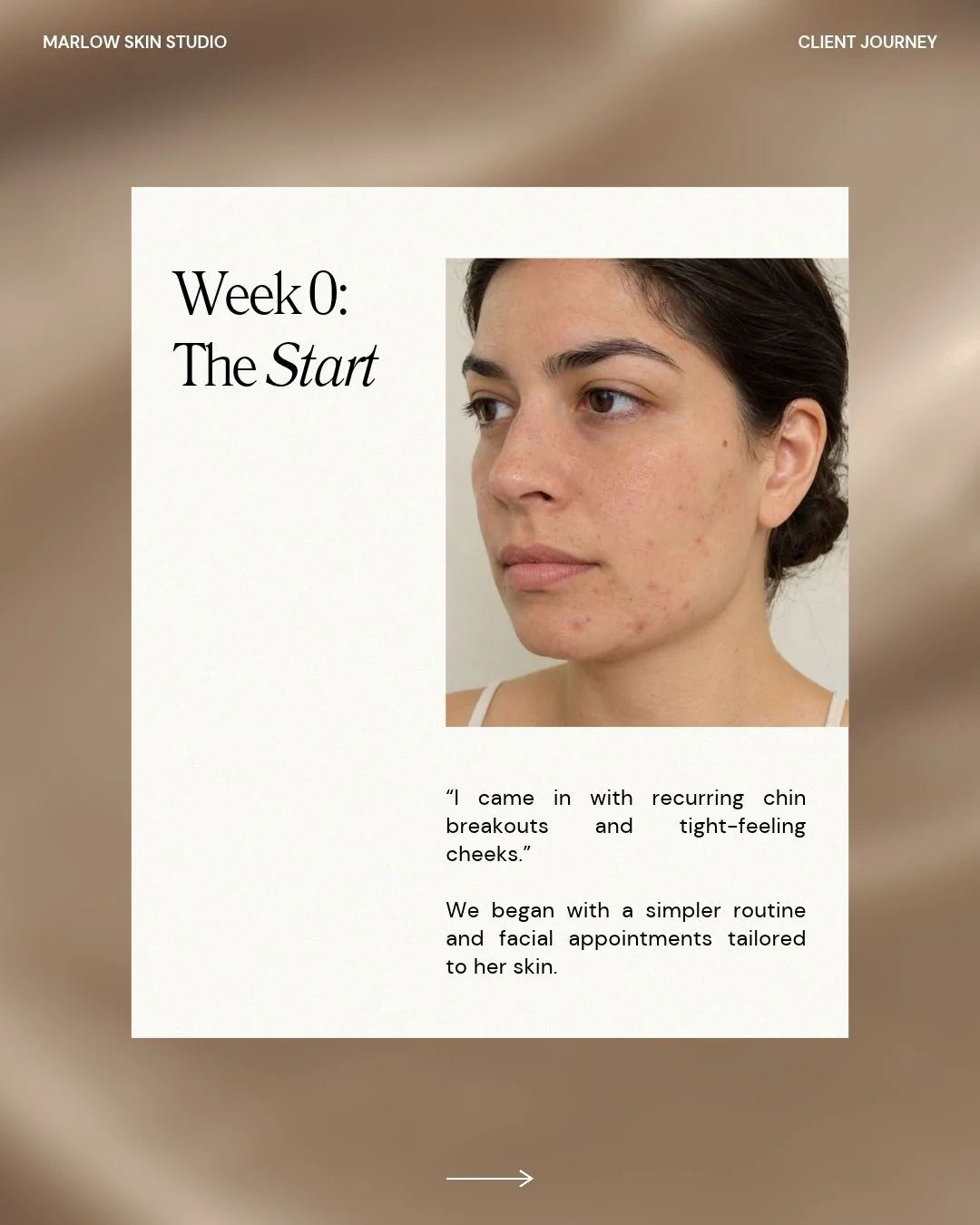 02 · WEEK 0
The concerns she came in with
“I came in with recurring chin breakouts and tight-feeling cheeks.”
Emma describes her skin in everyday words. Someone who hasn’t had a facial before can understand what was bothering her without knowing any treatment names.
This is also where we meet Lisa’s approach: a simpler routine and facial appointments tailored to Emma’s skin. It gives the reader a sense of where they began together.
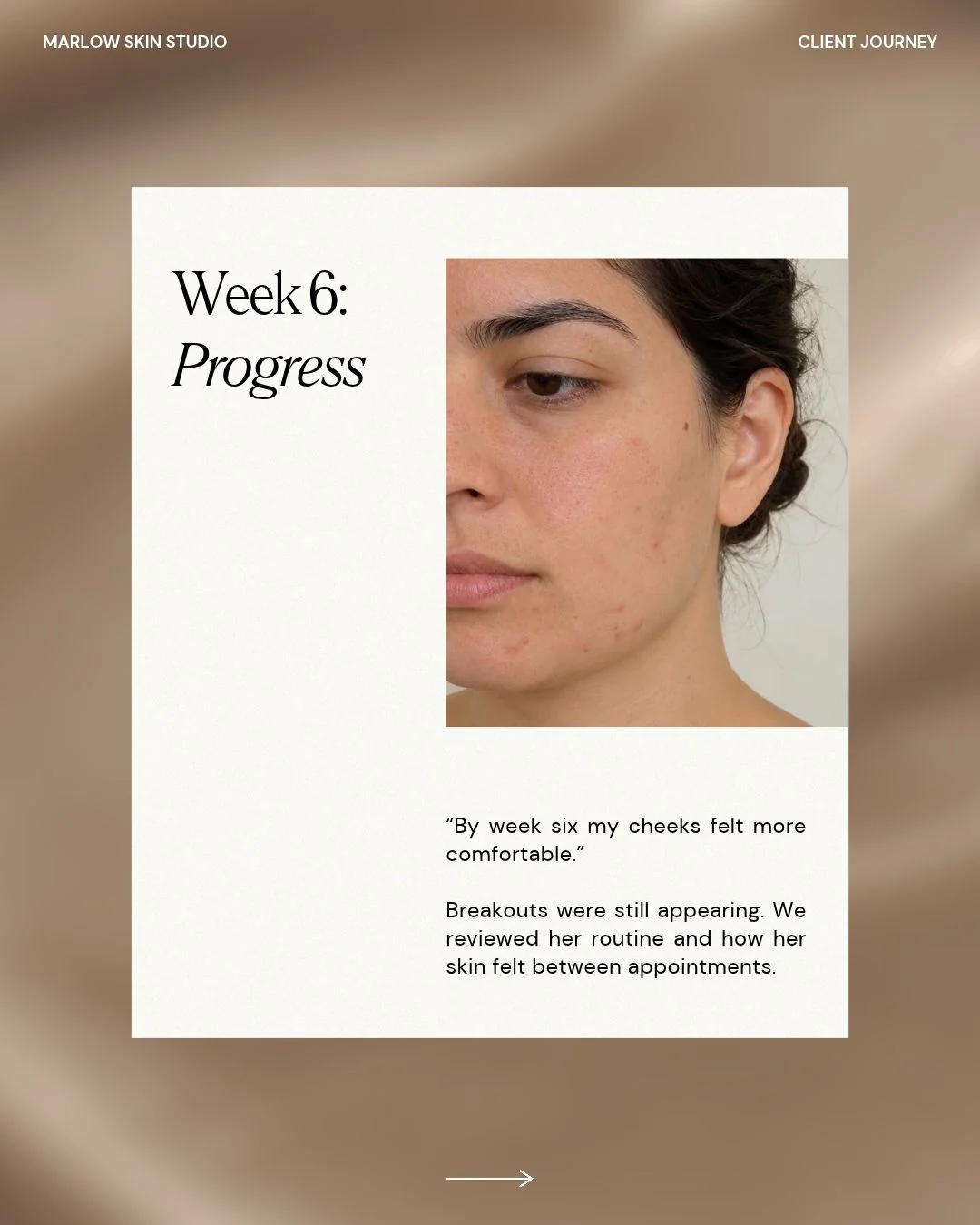 03 · WEEK 6
More comfortable, with some way to go
“By week six my cheeks felt more comfortable.”
Breakouts were still appearing, but Emma was noticing a difference in how her skin felt. That’s a part of the experience you’d miss if you only saw the first and last photos.
The check-in also shows that Lisa was listening between appointments. In your own client’s story, this might be where you mention a question they had or an adjustment you made together.
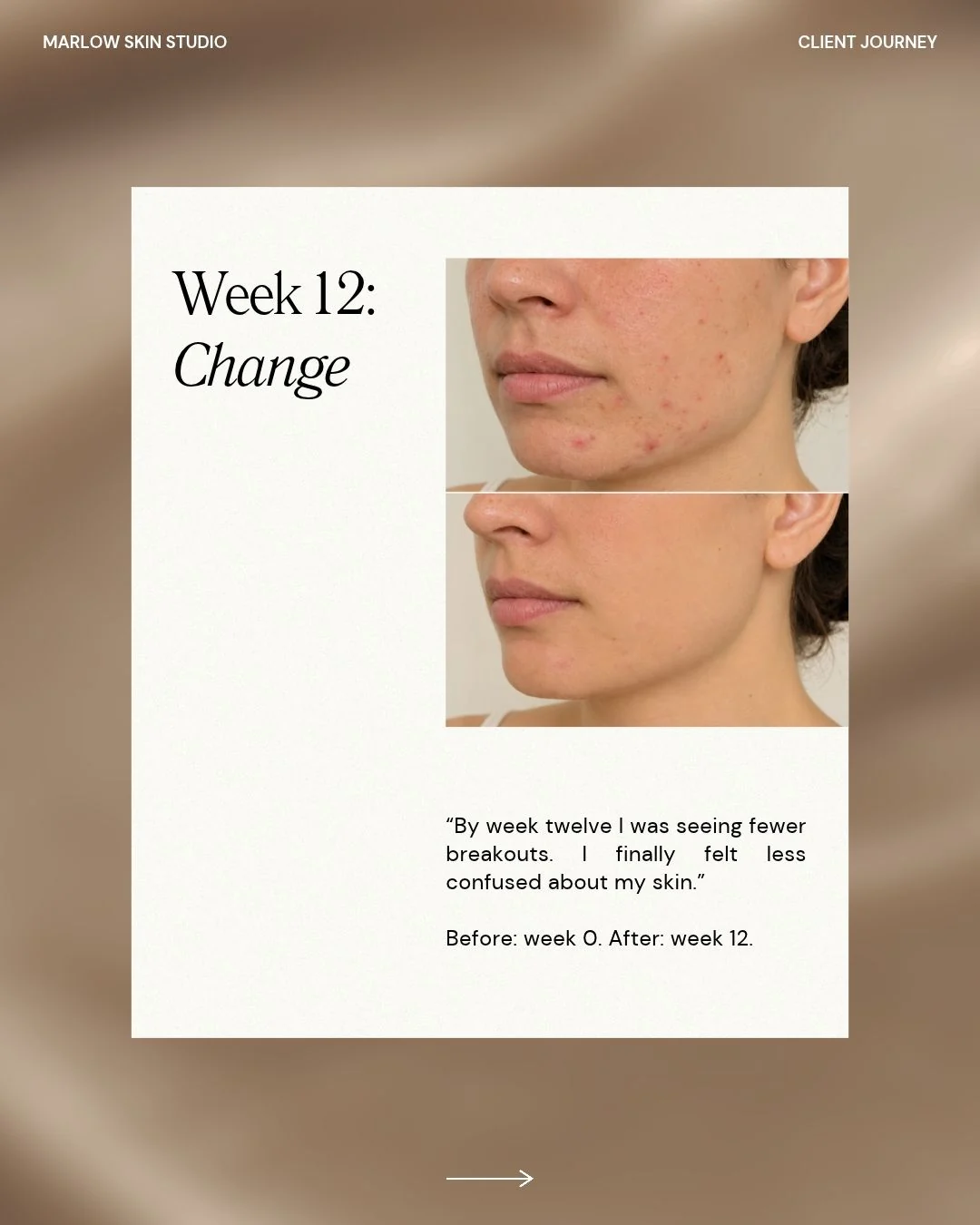 04 · WEEK 12
Fewer breakouts, less confusion
“By week twelve I was seeing fewer breakouts. I finally felt less confused about my skin.”
By this point, we’ve followed Emma from her first visit through her six-week check-in. The comparison now has a story behind it.
Her words bring us back to what mattered to her: fewer breakouts and a better understanding of her skin. When you share your own client’s progress, leave room for what they’re pleased about, too.
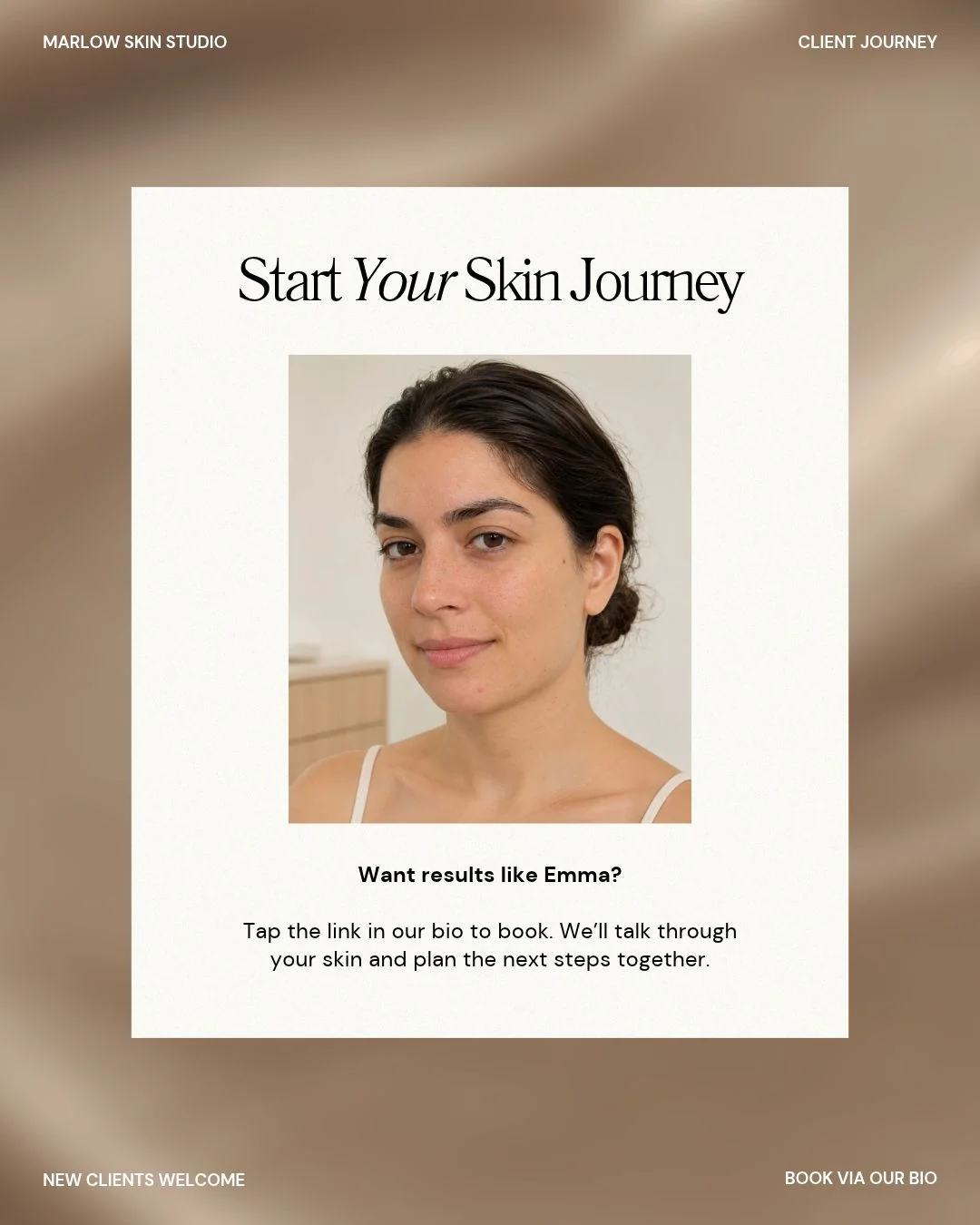 05 · AN INVITATION TO VISIT
A first step for someone reading along
Someone who recognises their own concerns in Emma’s story may be wondering whether you could help them, too. The final slide gives them somewhere to start: book a visit, talk through their skin and make a plan together.
You can keep that invitation as relaxed as you would in person. “Not sure where to begin? Book a first visit and we’ll talk it through” gives an interested reader a clear next step.
The middle of the journey is often the part a before-and-after post leaves out. Including it gives you space to talk about the care, patience and small changes behind the photos.
“Emma came to us with recurring breakouts, tight-feeling cheeks and plenty of questions about her skin. Here’s how her first 12 weeks unfolded, from simplifying her routine to feeling more comfortable at week six and seeing fewer breakouts by week twelve. We’ve included her words along the way. If any of this sounds familiar, you’re welcome to bring your questions to a First Visit. Book through the link in our bio.”
A short review is plenty when that’s what you have. If you’ve kept progress photos and your client is happy to share more, a carousel gives those moments a place in the story.
Make sure your client feels comfortable sharing
Before the post goes up, send your client the finished version, including the caption. Let them see which photos you’ve chosen, how you’ve used their words and whether their name will appear. They may be happy for you to keep progress photos for their appointments but prefer to leave them off Instagram.
Keep their review sounding like them. You can choose a shorter excerpt, as we did for Emma’s single post, while keeping its meaning. Any extra details about appointments or home care can come from you in the caption.
For the photos, aim for the same angle, lighting and area of skin at each visit, and include when they were taken. Leave the texture and blemishes as they are. Our before-and-after photography guide can help you get a setup that’s easy to repeat.
Your client may notice something the camera doesn’t capture, such as their skin feeling less tight. Sharing that in their own words lets you tell a fuller story alongside the visible changes.
A quick check before you share it
- Is your client happy with the words, photos and details you’re sharing?
- Does the review still sound like them and keep its original meaning?
- Can someone tell when the photos were taken and what happened between visits?
- Is the post easy to read on a phone, with a clear way to ask a question or book?
If there’s a review you’ve been meaning to share, start there. Think about what that client wanted help with and what they appreciated about coming to you. You already have the beginnings of a post in their words.