Handing over your social media can sound like a relief, especially when it keeps taking time you wanted for clients or your own evening. But before you compare packages, it helps to get specific about which parts you want someone else to handle.
We’ll work through the jobs, the questions to ask and a sample scope you can discuss with a provider. That way, you can compare the help you need with the help you’re actually being offered.
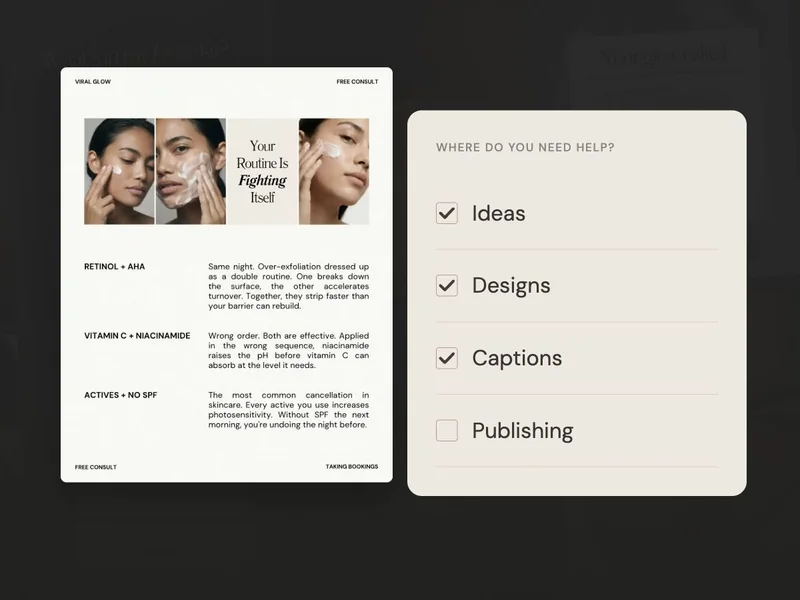
What do you want a social media manager to do?
Explaining my services
Approving treatment details
Answering client questions
Planning the content
Editing treatment videos
Preparing and publishing posts
Your list may look different. Perhaps you enjoy talking about skincare but never get around to editing the footage, or you like making posts and want help publishing them. Name the part that holds you up. A caption package won’t solve a shortage of filming time.
Perhaps you’ve spent evenings trying to work out why your website isn’t appearing in searches and reached the point where you’d rather pay someone to help. Be specific about that when you ask for a proposal: improving search visibility and managing Instagram are different jobs, and a package may only cover one.
Read the actual scope of the proposal and ask what terms such as “strategy” include.
What should a clear social media package include?
Ask for the proposed work in writing so you can read it together. Use this example scope to talk through the tasks and agree on a workload that fits your business.
| Job | Manager | You |
|---|---|---|
| Plan | 8 post ideas and draft captions | Confirm service facts |
| Film | Edit 4 supplied clips | Record footage and arrange permissions |
| Approve | Send drafts before scheduling | Review by the agreed date |
| Publish | Schedule approved posts | Flag changed availability |
| Reply | Not included in this example | Handle client enquiries |
Ask about revisions, extra charges and what happens if a deadline is missed. “Eight posts” is only part of the answer. You also need to know how many involve original video, who records it and who updates a caption if a service changes.
Which questions should you ask before hiring?
- Can you explain a skincare service to a new client? Look for clear writing, not just attractive grids. Ask them to explain the decisions in one example.
- Where does the footage come from? Confirm whether they visit your studio or edit clips you provide. Ask about travel and filming costs.
- Who checks and approves each post? You should verify treatment details, permissions, prices and availability before publication.
- Who owns the accounts and finished files? Keep control of your business accounts. Use appropriate role-based access rather than casually sharing your personal password.
- What happens when the arrangement ends? Ask how drafts, files, access and scheduled posts are handed back.
When you look at their examples, ask what they contributed and why they made those choices. A finished post may involve several people. You’re trying to understand the work you could expect from this person, including how they explain a service to a potential client.
What should their monthly report show?
“Followers went up.”
A follower increase is useful context. You still need to know what work was delivered and whether any enquiries became appointments.
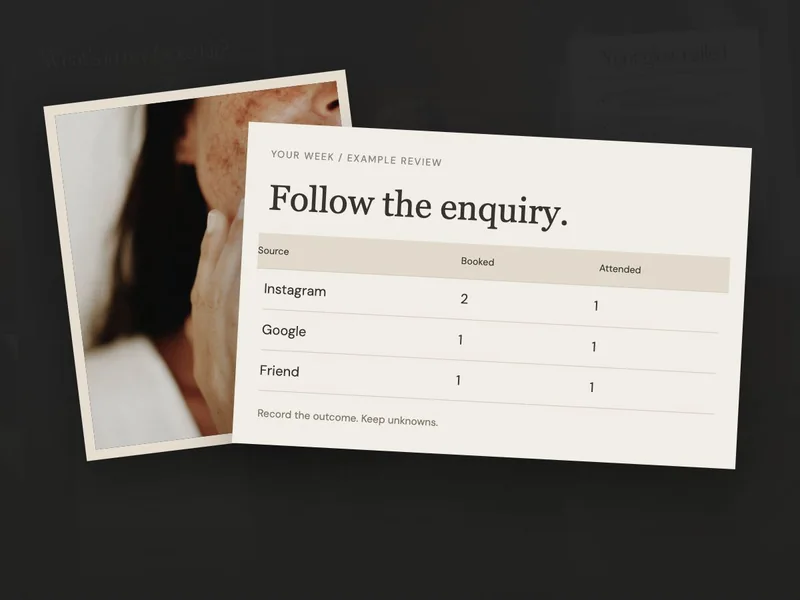
Work, response, next step.
Talk through what was published, what questions arrived, which bookings can be connected to those enquiries and what you’ll try next.
Agree on the information you can actually share and measure. You may need to supply booking outcomes if the manager can’t see your appointment system. Our simple booking-tracking guide gives you a starting point, including how to keep unknown sources separate.
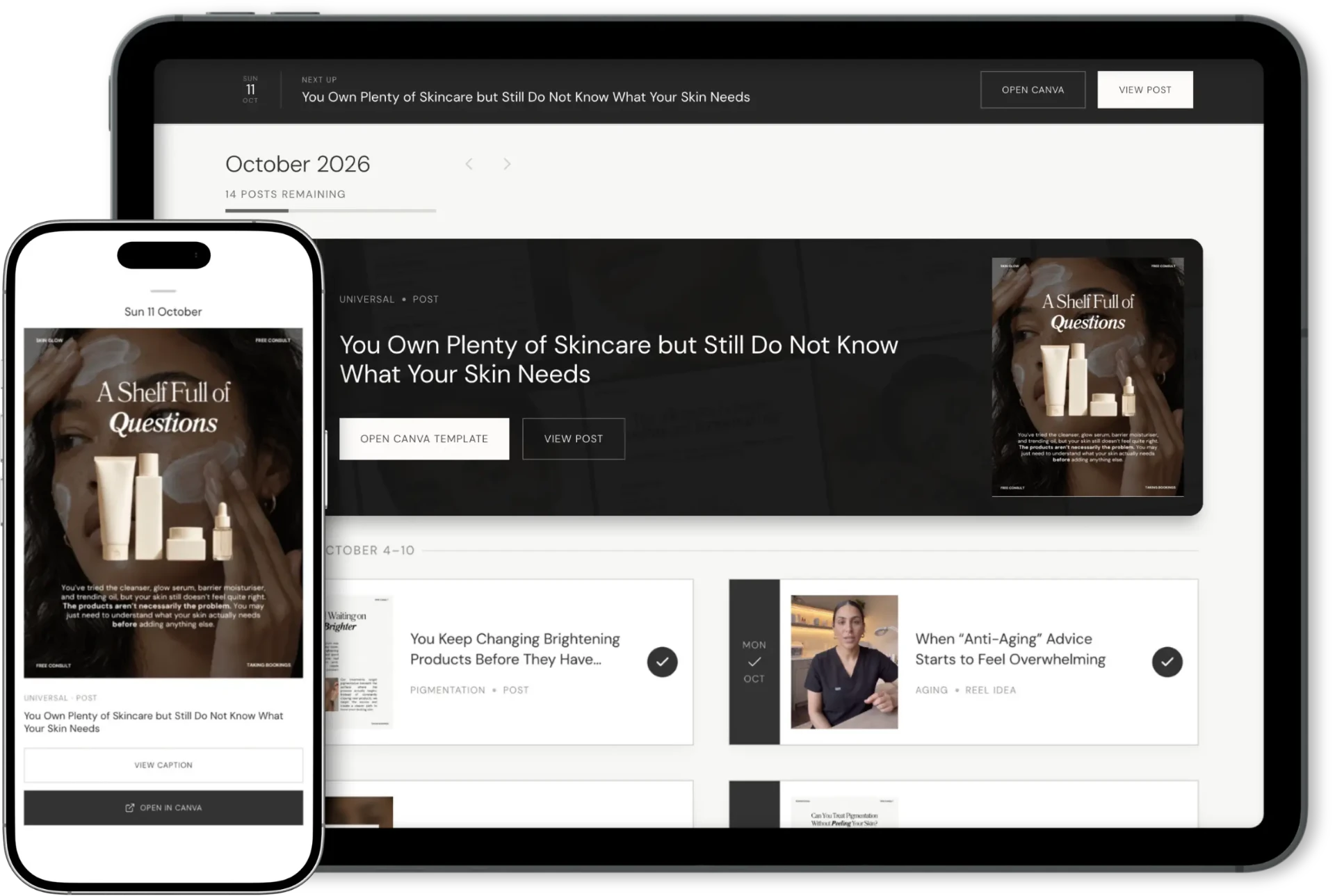
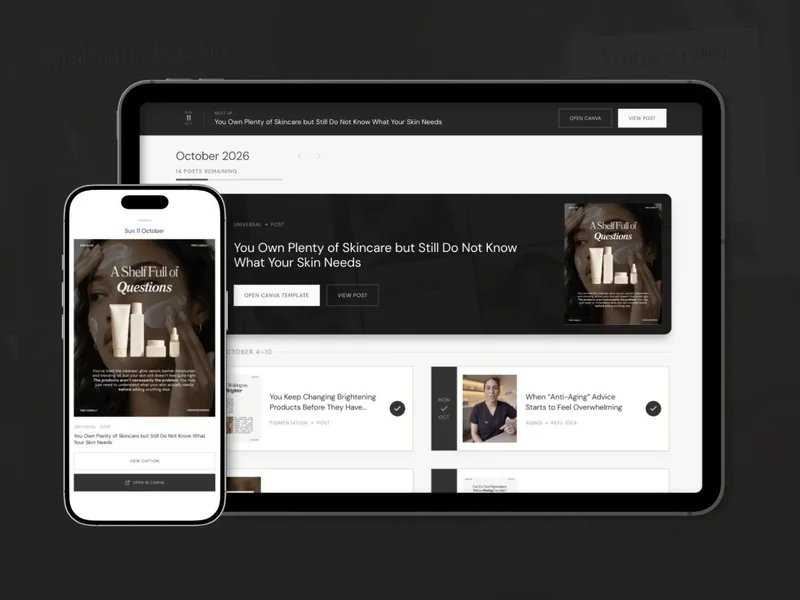
Bring the decision back to your original list. If you need designs, captions and planning prompts, a content membership may cover that part of the work. If you want someone to film, publish and manage the account for you, look for those jobs explicitly in the proposal. The useful choice is the one that fits the work you want help with.