You’ve explained the treatment, chosen the photo and written most of the caption. Then you reach the ending. “Book now” feels abrupt, but leaving it there may give an interested reader no idea what to do.
A call to action, or CTA, is simply that next step. We’ll look at six examples for your skincare business, from saving useful information to viewing appointments, and make sure each one leads somewhere that fits the post.
What should your skincare post ask a client to do?
Think about what the reader has just learned. After a first-visit explanation, they might want to see the appointment details. After a preparation checklist, saving the post could be more useful. You can choose an action that fits their interest at that point.
Give them one main action and tell them where to take it. “Book a facial through the link in our bio” names both, while “Treat yourself” still leaves someone working out what you mean.
In “View our facial menu through the link in our bio,” the action is viewing the menu and the route is your bio link. Check that the link leads to the menu you’ve mentioned.
Six CTA examples for your esthetician Instagram posts
Choose the wording that fits your services and booking setup. These are examples to adapt, and the destinations describe where a reader should arrive rather than live appointment offers.
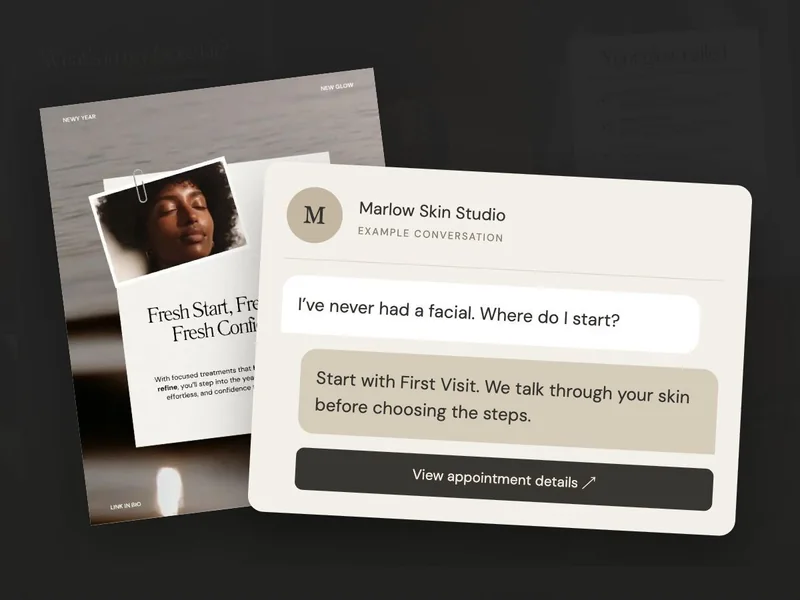
A first-visit explanation
View our first-visit facial through the link in our bio.
They’ve just learned what a visit involves. The service page can answer their next questions about details, price and booking.
A comparison of two facials
Compare our facial options through the link in our bio.
They’re still comparing the treatments. Give them somewhere to understand the differences before asking them to choose one.
A post with real availability
Check available facial appointments through the link in our bio.
They want to know whether a time works for them. Check that the opening is current and that your calendar shows the relevant availability.
An explanation with a useful checklist
Save this so you can find it before your visit.
Saving fits information someone will want to find later. You can recognise that as useful engagement while keeping it separate from confirmed bookings.
A post about a confusing service menu
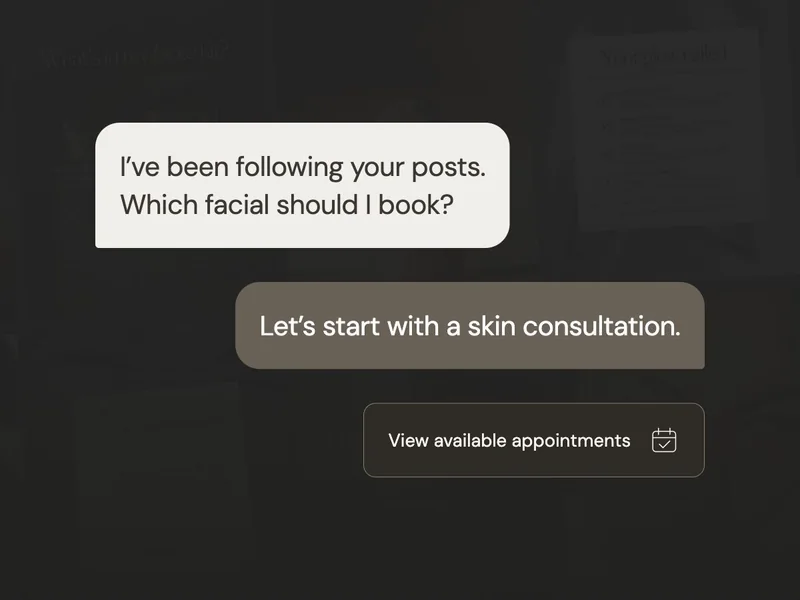
Not sure where to start? Send me a message about the appointment.
Offer help with a question you can answer in messages. If the conversation moves into private health details, use your usual private consultation process.
A Story about how to book
View facial appointments.
Give the link a clear label, then check it works. If you’ve designed a button graphic for the Story, you’ll still need to add an actual link.
Does your booking caption lead to the right place?
Let’s follow a reader through a first-visit example. Notice how the wording stays connected from the post to the profile link and then to the service page:
View the first-visit appointment through our bio.
Open the service you just read about.
Choose an available time.
Try the same route on your phone. Look for the service, price and available times you promised. If one detail is missing, start there before rewriting the invitation.
What should you leave out of a skincare CTA?
Like, save, share, tag a friend, DM us and book now!
View our facial options through the link in our bio.
This version gives someone reading about services a useful place to go. You can ask for a different action on a different post, when it fits what you’ve shared.
Use your real appointment name, availability and terms. That includes whether a consultation is free or paid. Someone should be able to make a decision from the information you give them, without a made-up deadline or last space.
How do you finish your next skincare caption?
When you reach the end of your next caption, ask yourself what would help the reader next. Name that action, explain the route and test it. Once those pieces are there, you can leave the ending short.
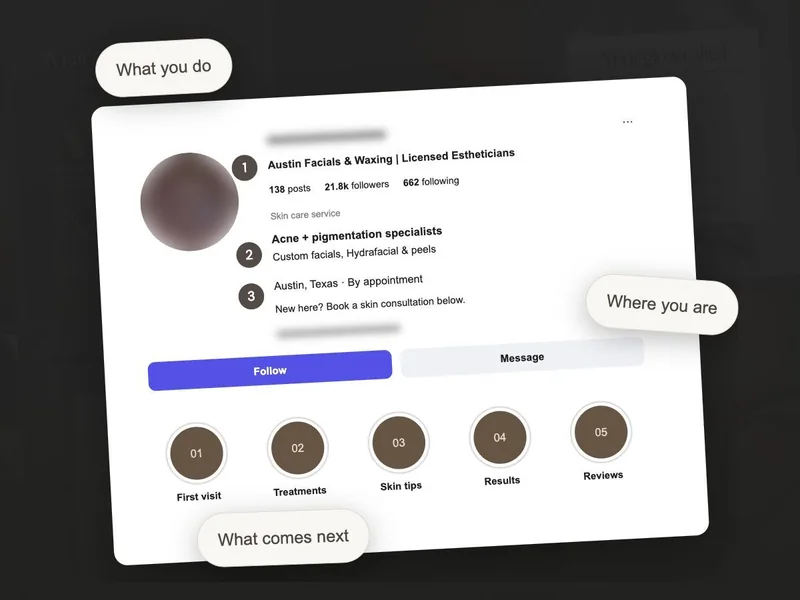
SCC captions give you wording to start with, but the service name and route still need to match your studio. Our Instagram profile guide helps you make the destination easy to find. If enquiries and bookings aren’t following, the posting without bookings guide looks at the wider journey.
You can make an invitation feel natural by letting it follow the explanation. Give someone a useful next step, then make that step easy to take.